Stained concrete floors for Tampa patios, driveways and interiors
Stain soaks into the concrete and changes its color, so you keep the slab's own texture instead of a painted coat on top. Bayshore Epoxy Floors stains and seals patios, walkways, driveways and indoor slabs across Hillsborough County, and the slab you start with decides the look.
- Local Tampa-area installers
- Free written quote
- Patios, driveways, interiors
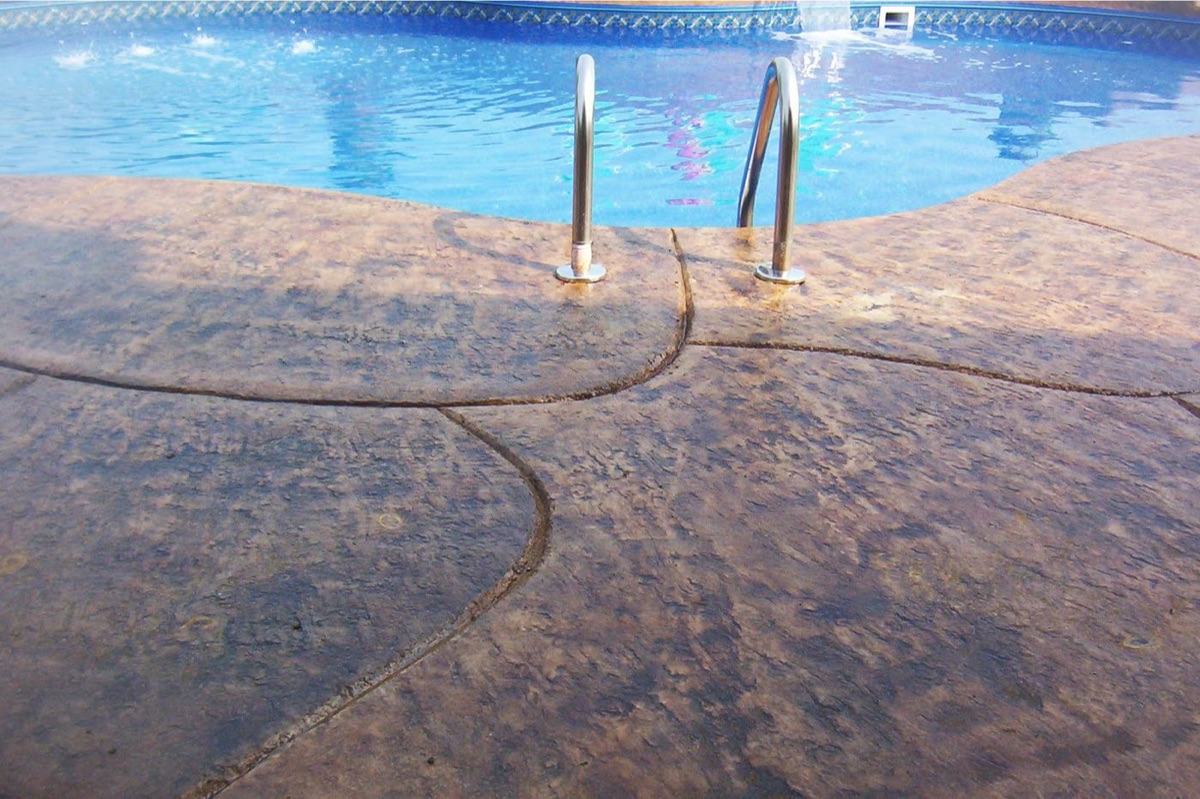
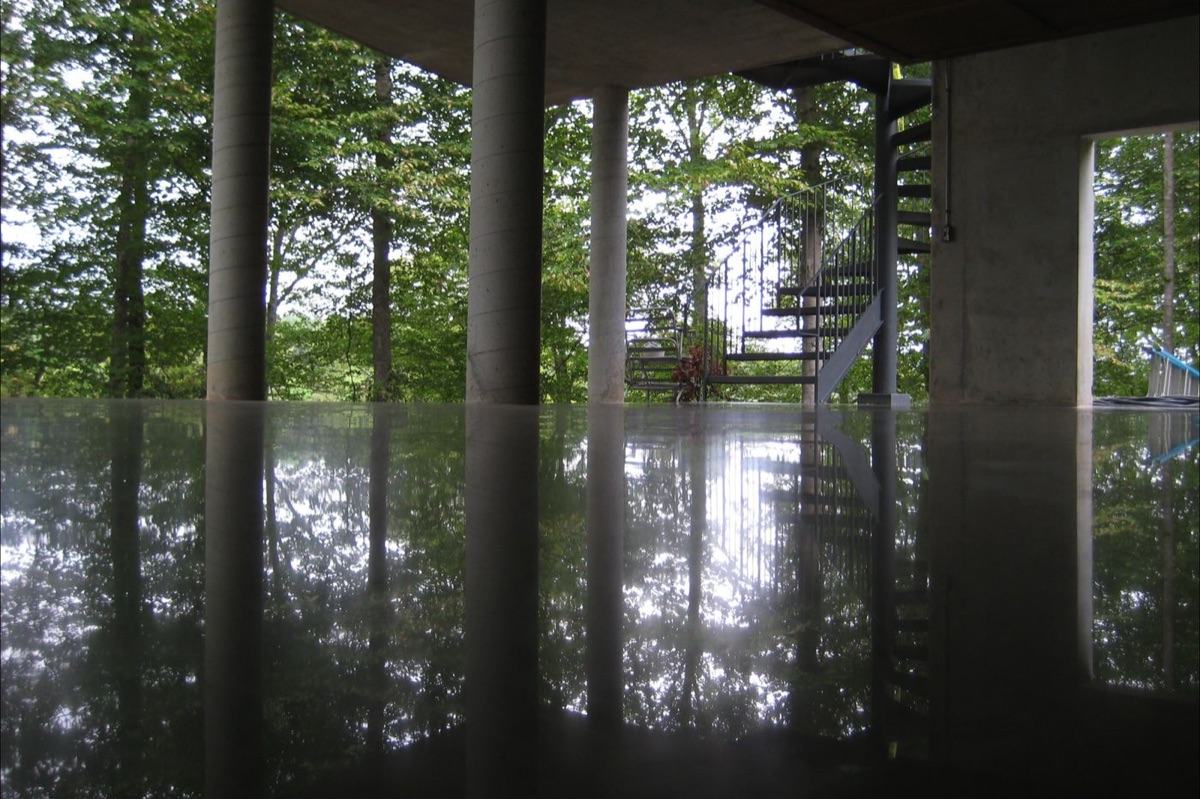
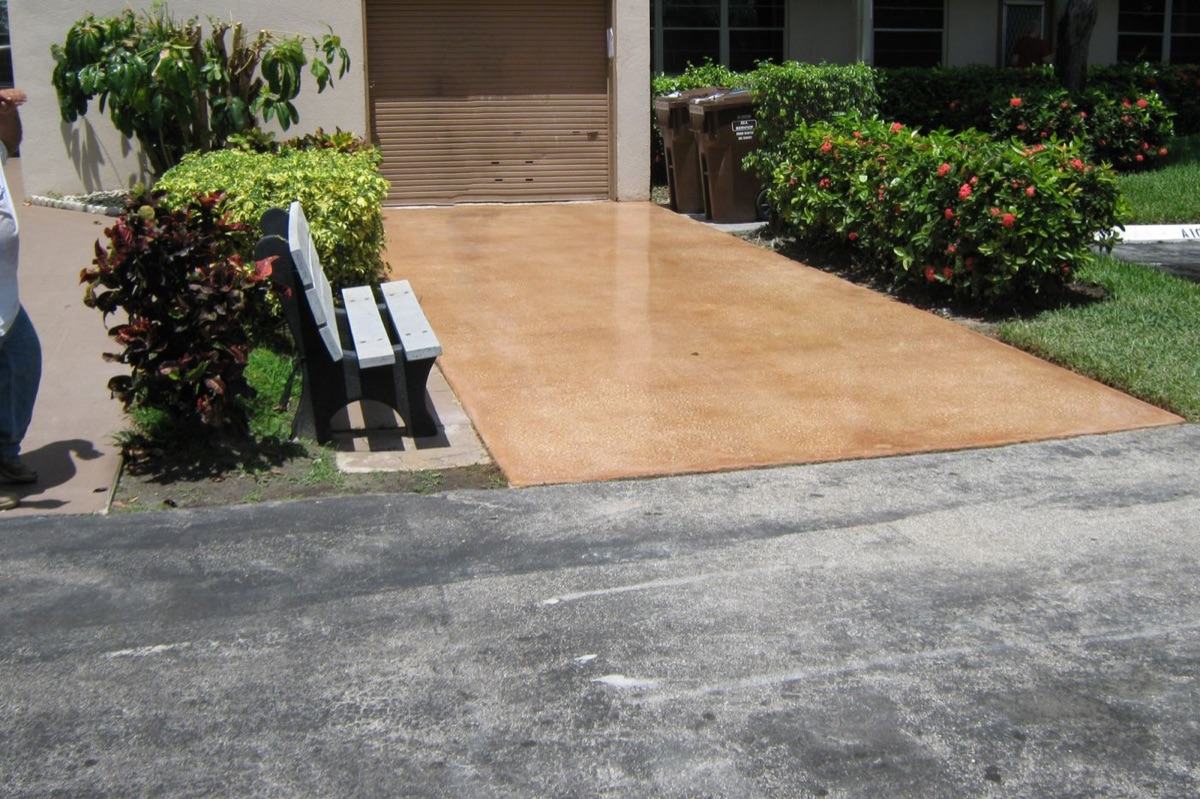
Example photos of stained and decorative concrete, shown for the look. Not photos of a specific past job.
What is a stained concrete floor?
It is concrete that has been colored with a stain that soaks in, then sealed, so the floor keeps its own texture and marks rather than getting a solid coat on top.
Acid stain reacts with the minerals in the concrete and leaves a mottled, earthy color, often browns, tans and soft greens. Water-based stain does not react; it soaks in and gives a wider range of colors that stay more even from corner to corner. Both go on after the slab is cleaned and open enough to take them.
Because the color lives in the concrete, every crack, trowel mark and old patch shows through. That is part of the look for many people, and it is also why an installer checks the slab before promising how it will turn out.
Acid stain
Reacts with the concrete for a variegated, aged-stone look. Results vary slab to slab, which is the appeal.
Water-based stain
More color choices and a more even result. Often picked for interiors and for matching a color.
Sealer
Stain alone wears and stains again. A sealer over it protects the color and sets the sheen, from matte to gloss.
The slab itself
Cracks, patches, grease and old paint show through or block the stain, so the slab is read before a color is chosen.
How does Tampa weather change a stained floor?
Strong sun, summer rain and constant humidity are the three things that wear on a stained surface here, so the sealer and the sheen matter as much as the color.
Outdoors, sun is the first test. Some stain colors and some sealers hold up in direct Florida sun better than others, and a covered lanai ages differently from an open driveway. Rain and humidity feed mildew on a surface that stays damp, which is why shaded patios get cleaned and resealed on a schedule.
Sun
Open driveways and pool decks see the most UV. The sealer is chosen for exterior use, and a floor in full sun is resealed sooner than one under a roof.
Rain and mildew
Shaded, damp spots grow mildew. A sealed surface cleans off more easily than bare concrete.
Pool splash and grip
Around a pool the sealer is picked for traction when wet. A glossy film is the wrong choice there.
Hot tires
Stain with a sealer is a decorative finish, not the toughest one. A garage floor that sees hot tires is usually better served by epoxy or polyaspartic.
Stained concrete, epoxy or polished concrete: which fits?
Stain suits outdoor and indoor slabs where you want a natural, mottled color; epoxy suits garages and shops that need a hard-wearing surface; polishing suits dense, sound slabs that you want to keep bare.
The three finishes sit on different layers of the same slab. Stain colors the surface. Epoxy and polyaspartic build a coating on top that carries the color and takes the wear. Polishing grinds the slab itself to a sheen. Many Tampa homes use more than one, for example a stained lanai and a flake garage.
Stain
Natural, variegated color. Good for patios, walkways, driveways and living space.
Epoxy or polyaspartic
A hard coating for garages, workshops and busy floors.
Polished concrete
Ground and sealed slab with a clean sheen. Needs a sound, level slab.
What does stained concrete cost in Tampa?
It is priced after someone sees the slab, because the area, the condition of the concrete and the sealer you choose move the number more than the color does.
A clean, sound patio is mostly stain and sealer. A cracked slab with old paint or glue needs preparation first, and that takes more time than the staining itself. You get a written price before anything is booked.
Area
The square footage, and whether the surface is flat or has steps and edges.
Condition
Cracks, patches, oil spots, old coatings or sealer to remove.
Stain type
Acid or water-based, one color or a layered, multi-tone look.
Sealer
Matte or gloss, and the level of traction needed around water.
The finishes, under the lights
Keep scrolling to walk the floor. Your installer brings physical samples to the quote.
How does a concrete staining job go?
Free visit and written quote
Someone looks at the slab, tests a small hidden spot if you want to see a color, and gives you a written price before anything is booked.
Clean and prepare
Dirt, grease, old sealer and anything else that blocks stain is cleaned or ground off, and cracks are repaired.
Test patch
Concrete takes stain differently from place to place, so a small area is stained first to confirm the color.
Stain
The stain is applied in even coats or layered for depth, and acid stain is neutralized once it has reacted.
Seal
A sealer chosen for the setting goes on, with grip added where the surface gets wet.
Walkthrough
You walk the floor with the installer and get care instructions and a clear time before it can take foot traffic and furniture.
Floors that stop people at the door
How a floor gets done
Three stages, and you know the price before any of them start.
What moves the price
Two garages the same size can quote differently. These are the reasons.
Questions people ask before booking
Questions from Tampa homeowners about stained concrete
Can any concrete floor be stained?
Most can, but results depend on the slab. Clean, unsealed concrete takes stain well. Slabs with old paint, thick sealer, glue or heavy oil need that removed first, and a heavily patched slab will show the patches. A short visit tells you what yours will do.
Will the color match from room to room or corner to corner?
Acid stain is variegated by nature, so no two areas match exactly. Water-based stain is more even and easier to match. Say early which look you want, because it decides which stain is used, and ask for a test patch before the whole floor.
Does a stained floor fade in the Florida sun?
Some colors and sealers hold up better in direct sun than others, and a floor under a roof lasts longer than an open driveway. A sealer chosen for exterior use slows fading, and resealing every few years keeps the color looking fresh.
Is stained concrete slippery around a pool?
It can be if it is sealed with a high gloss. Around a pool the sealer is chosen for traction when wet, often with a fine grit added, so the surface is safe barefoot. Tell the installer how the area is used so the finish matches.
How do I clean and care for a stained floor?
Sweep, and mop with a mild cleaner and water. Skip harsh acids and strong solvents, which can dull the sealer. Mildew in shaded spots can be washed off, and the sealer is refreshed when water stops beading and the color looks flat.
Related pages
Bayshore Epoxy Floors works across Hillsborough County. Back to the main site.