Glow-in-the-dark epoxy floors for Tampa homes and businesses
Photoluminescent epoxy floors that soak up light during the day and glow on their own after the lights go out. For garages, game rooms, kids' rooms, paths and pool decks across South Tampa.
- Local South Tampa installers
- Free written quote
- No-obligation estimate
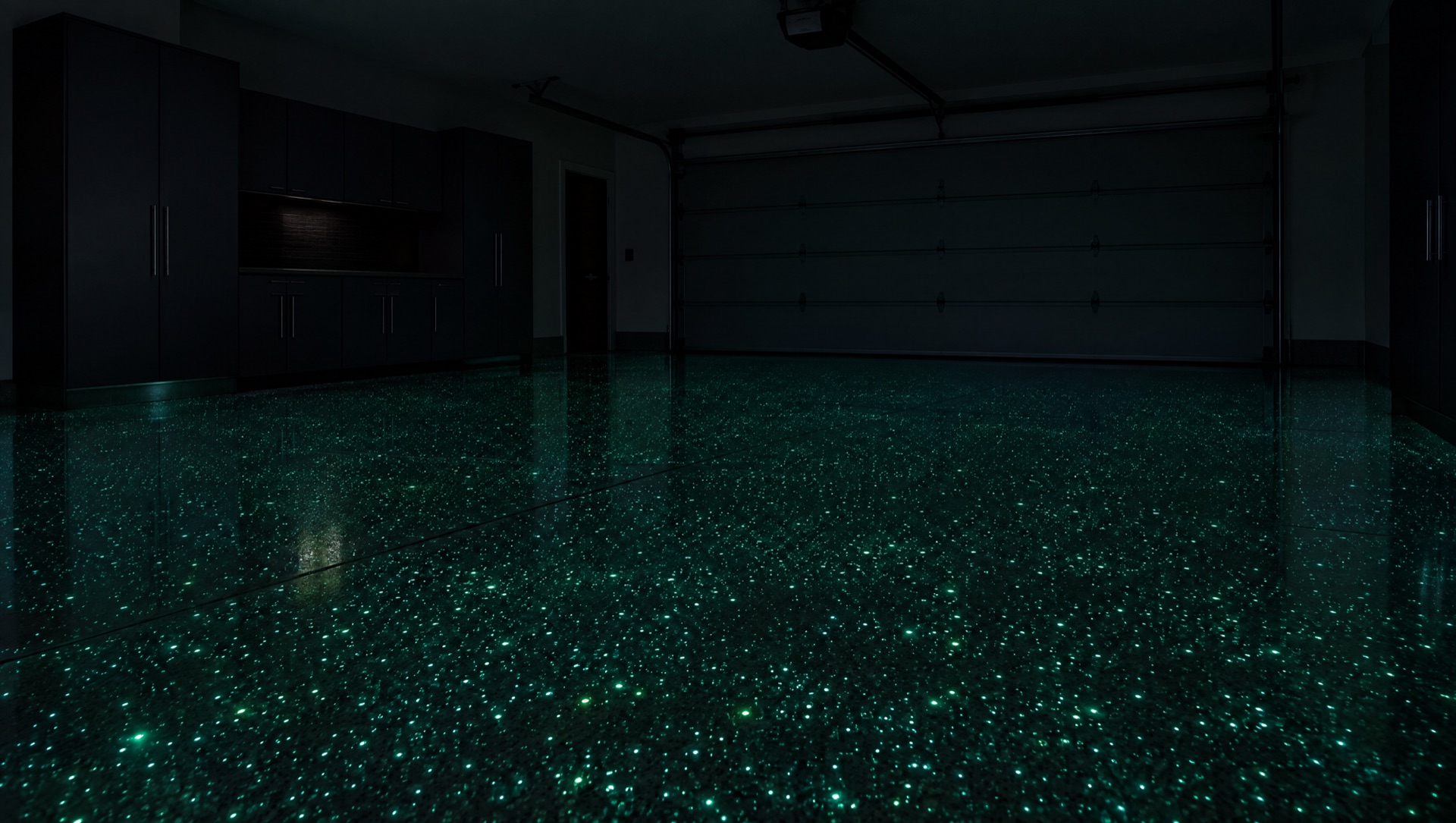
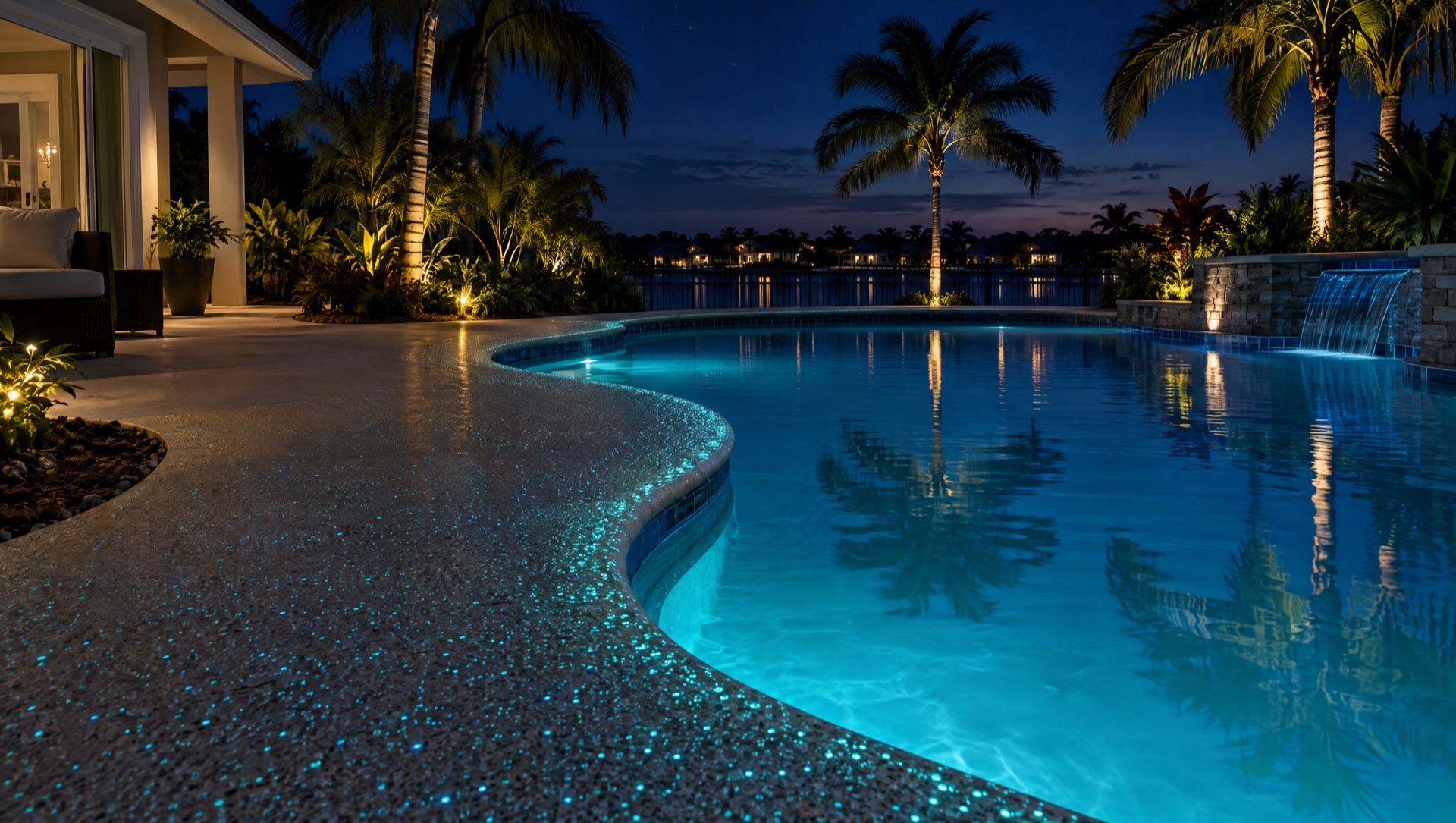
Design examples (AI renderings) to show the look. Not photos of past jobs.
How much does a glow in the dark epoxy floor cost in Tampa?
Every floor is quoted in person. The price depends on the slab, the repairs it needs, the size and the finish, so someone looks at it first and you get a written number before any work starts.
The finishes, under the lights
Keep scrolling to walk the floor. Your installer brings physical samples to the quote.
What is the difference between glow-in-the-dark and black-light epoxy?
A glow-in-the-dark floor stores light and glows on its own after the lights go off; a black-light floor glows only while a UV lamp shines on it.
People call both of these glow floors, and they are built the same way: a normal epoxy system with a special pigment in one layer and a clear topcoat over it. The difference is where the light comes from.
A glow-in-the-dark floor stores light and gives it back on its own once the room goes dark. A black-light floor only lights up while a UV lamp is shining on it. If you want the floor to glow with every light off, this page is the one. If you control the lighting, as in a bar or a home theater, and want bright neon color all night, look at black-light floors.
Glow in the dark (photoluminescent)
Charges from daylight, room lights or LEDs and glows with no lamp at all. Brightest in the first minutes, then it fades slowly over hours until it is charged again.
Black light (UV-reactive, fluorescent)
Lights up in vivid color only while a UV black light is on, and stops the moment it is off. No fading while the lamp is on.
In normal daylight
Glow pigment usually reads as a pale tint in the floor. Fluorescent pigment looks like a bright color. Both sit under a clear topcoat and feel like any high-gloss floor.
Where does a glow-in-the-dark epoxy floor work best?
A glow-in-the-dark floor works best where the room really goes dark: garages, game rooms, home theaters, kids' rooms, and pool decks or paths at night.
Garages and workshops
A soft glow across the floor or along the walkway to the door, so the space is not pitch black when the lights go off.
Kids' rooms and play rooms
Stars, swirls or a whole floor that glows at bedtime, then charges again from the room lights the next day.
Game rooms and home theaters
A floor that keeps glowing after the screen goes dark. Pairs well with a metallic base for a showroom look with the lights on.
Pool decks and garden paths
Florida sun charges glow pigment well, so path edges glow after sunset. Outdoors the topcoat has to be UV-stable, because plain epoxy yellows in direct sun, and the surface needs texture for wet feet.
Gyms and studios
Lines, borders or lane markings that glow when the lights drop for a class.
Showrooms and shops
Glowing inlays, borders and patterns that make a space memorable after hours.
How long does a glow-in-the-dark floor glow, and what does it need?
A glow-in-the-dark floor glows brightest in the first minutes after dark and fades over several hours, and it needs light to recharge.
The glow fades
It is brightest right after the lights go off and dims over the following hours. It will not light a room; think of it as a soft glow and an accent.
It needs light to charge
A floor in a room that never gets bright light will glow weakly. Daylight and bright LEDs charge it best.
More pigment, more glow
The glow is only as strong as the amount of pigment in the floor, which is a big part of the cost. It is often added to a metallic floor as an extra color rather than used alone.
The topcoat takes the wear
The pigment is sealed under a clear topcoat, which handles traffic and cleaning. Like any gloss floor, a busy one may need the topcoat refreshed after years of use.
How your floor gets done, step by step
Free visit and written quote
Someone looks at the slab, measures the space and shows you physical samples of each finish, including the glow and black-light options. You get a written price before anything is booked.
Moisture test
Moisture coming up through concrete is the most common reason coatings lift, so the slab is tested before a system is chosen. Where it reads high, a moisture-tolerant primer goes down first.
Diamond grinding
The surface is diamond-ground with a vacuum attached to keep dust down. Grinding opens the concrete so the coating bonds into it instead of sitting on top, which is what makes a floor last.
Crack and joint repair
Cracks, pits and damaged joints are filled and ground flush so they do not show through the finish.
Base coat and finish
The base coat goes down, then the look you picked: flake broadcast edge to edge, metallic pigment worked by hand, or glow-in-the-dark or UV-reactive pigment in its own layer.
Clear topcoat and walkthrough
A clear topcoat seals the finish and takes the wear. You walk the floor with the installer and get written care instructions and when it can take foot traffic and cars.
Floors that stop people at the door
How a floor gets done
Three stages, and you know the price before any of them start.
What moves the price
Two garages the same size can quote differently. These are the reasons.
Questions people ask before booking
Is a glow floor as durable as a regular epoxy floor?
Yes. The glow pigment sits in one layer of a normal epoxy system and is sealed under the same clear topcoat, so it wears like any high-gloss floor. What changes over the years is the topcoat, which can be refreshed; the glow pigment itself keeps charging and glowing.
How long does a glow-in-the-dark floor glow?
It is brightest in the first minutes after dark and fades gradually over several hours. How bright and how long depends on how much pigment is in the floor and how well it was charged. Ask to see a sample in a dark room before you decide.
Do I need a black light for it?
No. It charges from ordinary daylight or room light. A UV light charges it quickly, but it is not required.
Which colors glow the brightest?
Glow pigments come in several colors. Greens and aquas usually glow the brightest and longest; other colors trade some brightness for the look. The quote visit covers the options.
Can it go outside on a pool deck or path?
Yes, with a UV-stable topcoat and a textured surface for bare, wet feet. The sun charges it during the day, so it glows after sunset.
Can you do just a border or a pattern?
Yes. Glow can run through the whole floor or only in lines, borders or a pattern set into a metallic floor, which also keeps the cost down.
Where we work
Bayshore Epoxy Floors works across South Tampa. Back to the main site.
Specialty finishes